


SMD vs COB vs MIP: The Complete Technology Comparison
This guide provides a quantifiable comparison across performance, thermal management, color quality, use cases, cost, and serviceability—strictly from a display perspective.
Performance, Brightness and Measured Metrics
To compare these technologies objectively, we rely on standard display metrics: cd/m² (nits), pixel pitch (mm), contrast ratio, uniformity (%), color gamut (NTSC / Rec.709 / DCI-P3), and color point shift (Δu’v′).
In a controlled test at the same input power (100W per m²) and same active display area (1m²), the following typical values are observed:
| Parameter | SMD (Surface-Mount) | COB (Chip-on-Board) | MIP (MicroLED-in-Package) |
|---|---|---|---|
| Peak Brightness (cd/m²) | 8,000 – 10,000 | 6,500 – 8,500 | 5,000 – 7,000 |
| Contrast Ratio (Full Black) | 5,000:1 – 8,000:1 | 10,000:1 – 20,000:1 | 15,000:1 – 30,000:1 |
| Brightness Uniformity (%) | 85% – 90% | 92% – 96% | 90% – 94% |
| Color Gamut (DCI-P3 Coverage) | 85% – 95% | 95% – 105% | 100% – 110% |
| Color Shift (Δu′v′ over 1000h) | 0.008 – 0.012 | 0.004 – 0.007 | 0.003 – 0.005 |
These measurements follow IEC 62341 display testing standards, taken at a distance of 1m using a calibrated spectroradiometer.
SMD offers the highest raw brightness, making it ideal for sunlight-readable outdoor billboards and high-brightness rental stages.
COB provides superior uniformity and contrast, ideal for indoor fine-pitch video walls in control rooms and executive boardrooms.
MIP, while currently lower in peak brightness, delivers exceptional color stability and ultra-fine pixel pitches, positioning it as the future of micro-pitch displays.
Thermal Design, Lifespan and Reliability
Thermal management directly impacts display longevity and color consistency. The key parameter is junction temperature (Tj). Higher Tj accelerates luminance decay and color drift.
In a high-temperature environment such as an outdoor LED cabinet in summer (ambient 45°C) with active cooling, estimated junction temperatures are:
- SMD: Tj ≈ 85–95°C (higher due to package-level thermal resistance)
- COB: Tj ≈ 75–85°C (direct die-to-substrate thermal path)
- MIP: Tj ≈ 70–80°C (micro-scale dies with efficient heat spreading)
Using the Arrhenius model, the estimated L70 lifespan (time to 70% brightness maintenance) at these Tj values:
| Technology | L70 @ 25°C (hours) | L70 @ 45°C (hours) | Typical Failure Mode |
|---|---|---|---|
| SMD | 70,000 – 90,000 | 40,000 – 55,000 | Solder joint fatigue, encapsulation yellowing |
| COB | 90,000 – 110,000 | 60,000 – 80,000 | Phosphor degradation, layer delamination |
| MIP | 100,000+ | 70,000 – 90,000 | Driver IC stress, micro-die defects (early stage) |
For high-density indoor cabinets or fully sealed outdoor displays, COB and MIP offer better thermal safety due to direct chip-to-substrate construction. Best practices include thermal interface pads, forced-air or liquid cooling, and current derating by 10–15% in hot environments.
Color Performance, Viewing Angles, Gray Scale and Refresh Rate
Color performance: COB typically achieves excellent color volume with stable grayscale performance. SMD commonly covers 85–95% of DCI-P3. MIP can exceed 100% DCI-P3 in premium grades.
Viewing angles: SMD offers wide horizontal/vertical viewing angles (up to 160°), but with slight color shift off-axis. COB provides extremely consistent color across wide angles. MIP maintains tight color consistency even at extreme angles.
Gray scale & refresh rate: All three support 14–16 bit gray scales. SMD and COB pair well with standard PWM driver ICs (3.8–7.8 kHz). MIP requires high-frequency PWM (≥ 7.8 kHz) to avoid low-gray flicker during camera capture.
Scan ratios: SMD often uses static or 1/4–1/8 scan for outdoor applications. COB favors 1/16–1/32 scan for fine-pitch indoor. MIP commonly adopts 1/32–1/64 scan for ultra-high-density displays.
Use Cases, Brightness Uniformity and Retrofit Guidance
Each technology excels in specific display scenarios:
| Application | Recommended Technology | Key Reason |
|---|---|---|
| Outdoor Billboards / Perimeter LED | SMD | Highest brightness, best cost-per-pixel |
| Indoor Fine-Pitch Video Walls (P1.2–P2.5) | COB | Superior uniformity, anti-moire, small pixel pitch |
| Rental & Staging / Live Events | SMD | Easy module replacement, rugged design |
| Broadcast Studios / Control Rooms | COB | High contrast, no pixel glare, camera-friendly |
| Corporate / High-End Meeting Rooms | MIP | Ultra-fine pitch (P0.5–P0.9), premium color stability |
| XR Virtual Production Stages | COB / MIP | High refresh rate, wide color gamut, minimal reflection |
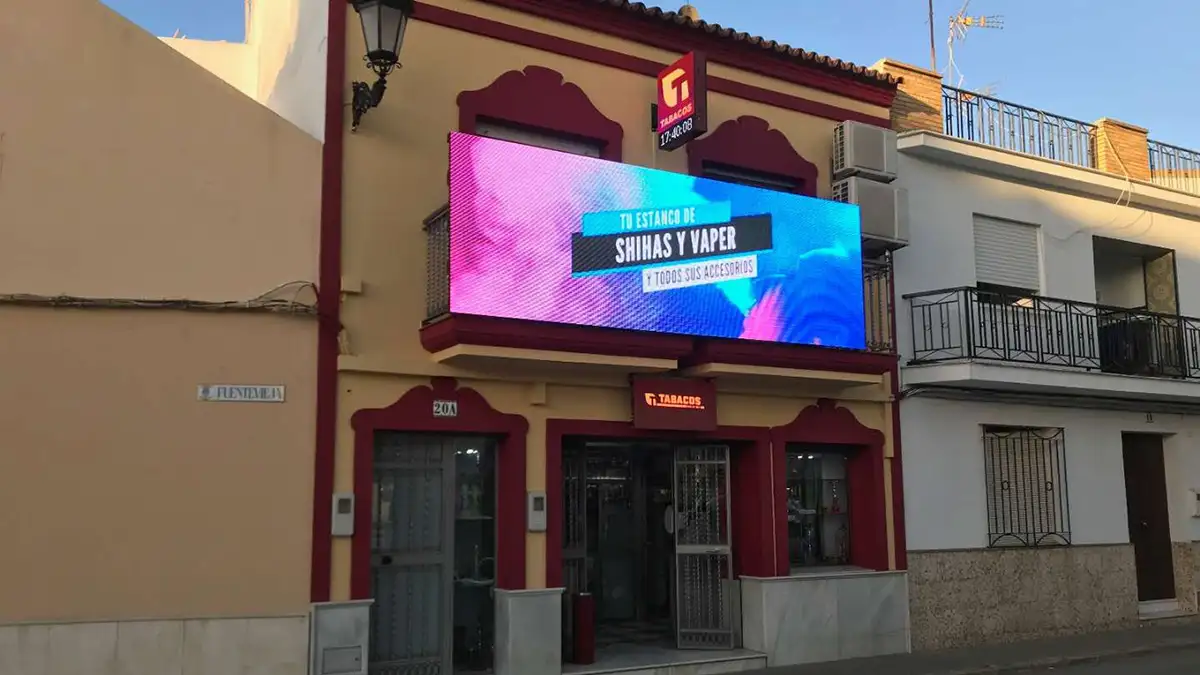
For retrofit projects: SMD modules are easiest to swap into existing cabinet architectures.
COB typically requires matched cabinet designs and integrated heat sinks.
MIP is recommended for new, high-end installations where pixel pitch and visual performance outweigh budget constraints.
Manufacturing, Serviceability, Standards and Supplier Comparisons
Manufacturing processes differ significantly:
- SMD: Individual packaged LEDs are pick-and-placed onto PCBs. High yield, easy rework, mature ecosystem.
- COB: Bare dies are directly bonded to the substrate, followed by wire bonding and unified phosphor coating. Lower initial yield but excellent long-term reliability.
- MIP: MicroLED dies are pre-packaged into miniature SMD-compatible formats, then mounted like conventional SMD. Combines fine-pitch benefits with SMT manufacturability, but limited to advanced fabs today.
Serviceability: SMD allows fast front or rear module replacement with standard tools. COB usually requires full module replacement due to monolithic encapsulation. MIP supports individual package replacement but demands precision equipment.
Supplier comparison (typical values):
| Parameter | SMD Suppliers | COB Suppliers | MIP Suppliers |
|---|---|---|---|
| Warranty (years) | 3 – 5 | 5 – 7 | 3 – 5 (early stage) |
| Spare Module Availability | High (standardized) | Medium (cabinet-matched) | Low (proprietary) |
| Typical Lead Time | 2 – 4 weeks | 4 – 6 weeks | 8 – 12 weeks |
Certifications for the US market: Ensure products comply with UL 62368-1 (display safety), FCC Part 15 Class A/B (EMC), ETL (field certification), and RoHS. For outdoor applications, confirm IP65/IP67 ingress protection ratings.
For tailored advice, submit your project parameters: application type, target brightness (nits), pixel pitch requirement, ambient lighting conditions, and installation environment. We offer free sample evaluations, certified installer referrals, and custom quotations within 48 hours.
Frequently Asked Questions
How does MicroLED-in-Package (MIP) technology differ from COB and SMD in structure and display performance?
MIP packages microLED dies (< 100µm) into surface-mountable formats, bridging COB’s fine-pitch capability with SMD’s assembly efficiency. Performance-wise, MIP offers outstanding color stability, ultra-high contrast, and the smallest pixel pitches (P0.5–P0.9), though it currently trails SMD in peak brightness and carries a higher upfront cost.
What are the practical differences between SMD, COB and MIP regarding brightness, thermal behavior and cost?
SMD delivers the highest brightness and lowest cost-per-pixel, but with moderate uniformity and higher thermal resistance. COB improves thermal dissipation and uniformity, suited for close-viewing indoor walls. MIP provides premium color accuracy and the finest pixel pitches, but at a higher price point and slightly lower total light output.
What driver IC and refresh-rate considerations apply when specifying these LED display types?
SMD and COB work reliably with mainstream PWM driver ICs (3.8–7.8 kHz). MIP demands high-frequency PWM (≥ 7.8 kHz) and advanced driver ICs to prevent low-gray flicker and camera artifacts. Always validate grayscale linearity and refresh performance under real shooting conditions.
Which certifications and safety standards matter when procuring LED displays in the United States?
Prioritize UL 62368-1 for electrical safety, FCC Part 15 for electromagnetic compliance, ETL listing for field acceptance, and RoHS for environmental compliance. For outdoor deployments, ensure IP65 or higher ratings for dust and water resistance.

Get Our Latest Products & News
Subscribe to our newsletter for fresh product launches, industry insights, and exclusive offers tailored for global partners. Stay ahead with updates that matter to your business!
