


Transparent LED Screen: Applications & Buying Guide
Modern architectural and exhibition design increasingly relies on glass structures to create open, bright, and immersive spaces. However, traditional digital displays often conflict with this design philosophy.
Ordinary LED walls are bulky, heavy, and completely opaque, blocking natural light and destroying the original visual texture of glass walls and windows. Printed posters and static banners, while transparent enough, cannot deliver dynamic content or interactive visual storytelling.
Transparent LED screens solve this long-standing contradiction.
They allow buildings, exhibition halls, and retail spaces to retain daylight and open visibility while displaying clear, vivid video and graphic content.

When the screen is off, it looks like ordinary glass; when turned on, floating luminous content overlays the glass surface without blocking the background view.
This balance of transparency and visualization has made transparent LED displays one of the most widely adopted display technologies for modern commercial, cultural, and architectural projects.
What Is a Transparent LED Screen and How Does It Work?
A transparent LED screen is a self-luminous display built on a clear, lightweight transparent substrate, usually flexible PET film or tempered glass.
Instead of using a backlight layer like LCD screens, it uses independently luminous micro LED beads arranged in a regular grid. The gaps between lamp beads allow light and sightlines to pass through, creating a natural transparent effect.
The core structure consists of four practical components: a transparent base substrate, miniature SMD LED chips, invisible micro conductive circuits, and a concealed power and control system.
For film-style products, an additional self-adhesive layer allows direct installation on existing glass surfaces without drilling or structural modification.
Transparency and Pixel Pitch Relationship
The transparency and clarity of a transparent LED screen depend entirely on pixel pitch, the distance between adjacent LED beads.
Smaller pitches deliver sharper images but slightly reduce transparency, while larger pitches provide higher light transmission with lower resolution.
This physical tradeoff determines all real-world installation designs:
2–3mm pitch:
60%–70% transparency, suitable for close viewing distances of 2–5 meters, ideal for museum exhibition cabinets and high-end retail windows
5–7mm pitch:
70%–80% transparency, balanced clarity and penetration, perfect for storefronts, airport glass partitions, and office atriums
10–20mm pitch:
80%–90% high transparency, designed for long-distance viewing over 10 meters, widely used for building glass curtain walls
Most mature transparent LED screens support automatic brightness adaptation.
They boost brightness to 3000–5000 nits under strong daylight to ensure content visibility and dim down to 300–800 nits at night to avoid glare and maintain comfortable light transmission.
Three Common Types of Transparent LED Screens
Not all transparent LED displays are the same. Different structural designs fit completely different project scenarios, installation conditions, and budget requirements.
Rollable Self-Adhesive Transparent LED Film
This is the most flexible and easy-to-install transparent display solution.
With a thickness of only 1–3mm and an ultra-light weight of 2–4kg per square meter, the film can be rolled, cut, and customized into irregular shapes.
It adheres directly to the inner side of existing glass, requiring no steel frame reinforcement or complex construction.
It is the best choice for finished buildings, renovated exhibition halls, and retail storefronts where structural changes are not allowed.
It effectively reduces installation costs and construction cycles while maintaining the original architectural style.
Rigid Transparent LED Panel
Rigid transparent LED panels are assembled with fixed cabinet structures, offering higher overall stability, stronger weather resistance, and higher peak brightness.
Unlike flexible film, they require standardized frame installation and are more suitable for outdoor and semi-outdoor building facade projects that demand long-term operational stability.
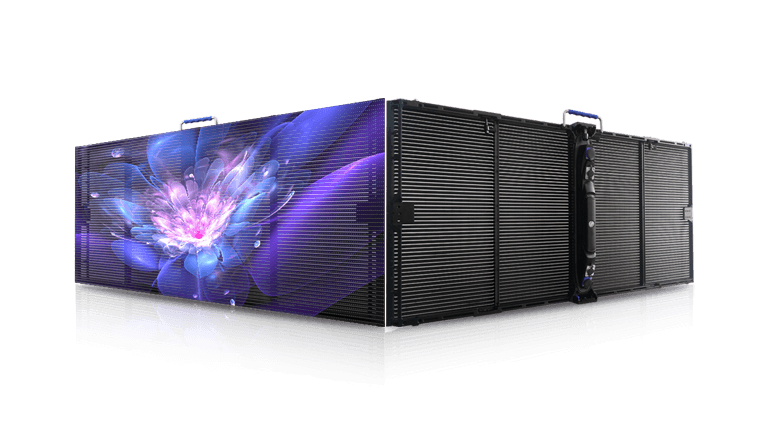
Although less flexible, rigid panels deliver more consistent flatness and better heat dissipation, making them reliable for large-area outdoor media wall applications.
Glass-Embedded Integrated LED Display
This high-end solution embeds micro LED circuits inside laminated tempered glass during production.
It achieves the most integrated and invisible visual effect with no exposed screen components.
However, customized production leads to higher costs and inconvenient on-site maintenance.

It is mainly used for high-end hotel lobbies, art museums, and landmark architectural spaces with strict aesthetic standards.
Practical Application Scenarios of Transparent LED Screens
Museums and Exhibition Halls
Museums require both cultural relic display and digital interpretation.
Traditional display screens block the view of physical exhibits, while text boards appear rigid and outdated.
Transparent LED screens perfectly solve this problem.
Installed on the surface of exhibition glass and display cabinets, they overlay dynamic evolutionary processes, historical introductions, and artistic interpretations directly in front of cultural relics, fossils, and artworks.
Visitors can clearly observe real exhibits while viewing immersive digital explanations, creating a layered viewing experience that combines physical display and digital storytelling.
Retail Storefronts and Brand Windows
For retail brands, transparent LED screens transform passive static window displays into active dynamic marketing media.
During daytime business hours, the glass remains highly transparent, ensuring customers can clearly view indoor products and store layouts.
After dark, the entire glass surface turns into a high-definition display screen for brand promotion, new product showcases, and seasonal campaign visuals.
This dual-mode usage greatly enhances the commercial value of storefront glass without sacrificing store permeability.
Office Atriums and Transit Hubs
Modern office buildings, airports, and subway stations use a large number of glass partitions to create a spacious and bright public environment.
Transparent LED screens can be seamlessly integrated into these glass structures to display brand information, navigation guidelines, public announcements, and real-time data without destroying the minimalist architectural atmosphere.
Building Glass Curtain Wall Media Facades
Large commercial complexes and urban landmark buildings widely adopt high-transparency LED screens for facade upgrading.
The screens maintain full daylight permeability during the day and transform the entire building into a large-scale urban media canvas at night, displaying public art, city-themed visuals, and commercial content.
Real Advantages and Practical Limitations
Transparent LED technology has unique market advantages, but it also has objective limitations that every project planner should understand before selection.
Core Advantages
- Architectural compatibility: Preserves natural light and open vision, adapting to modern green building design standards
- Lightweight and safe: Ultra-light film structure avoids heavy load-bearing risks and structural reinforcement costs
- Energy saving: Only lit pixels consume power, reducing overall energy consumption compared with traditional full-screen luminous displays
- Low maintenance: Encapsulated LED chips are dustproof and moisture-proof, supporting partial replacement and front-side maintenance
Known Limitations
- High transparency and high definition cannot be achieved simultaneously; ultra-transparent screens sacrifice partial resolution
- Most flexible LED film products are suitable for indoor and semi-outdoor environments; full outdoor waterproof models require customized protection
- Small-pitch high-resolution transparent displays have relatively high unit costs, limiting large-scale ultra-high-definition outdoor applications
Step-by-Step Practical Buying Guide
Based on actual project delivery experience, the correct selection of transparent LED screens depends on application scenarios, viewing distance, and ambient light conditions, rather than blindly pursuing higher resolution or higher transparency.
First, confirm the viewing distance.
For close-view scenarios within 5 meters such as museum showcases and boutique windows, choose P2.5–P3 small-pitch products to ensure detailed and delicate content.
For medium distances of 5–10 meters, P5–P7 models offer the best balance. For building facades viewed from over 10 meters, high-transparency large-pitch screens are more cost-effective.
Second, match brightness according to ambient light.
Indoor environments with soft light only need 2500 nits brightness. Glass windows facing direct sunlight must adopt 4000 nits or above to ensure clear display under strong light.
Third, verify real transparency data.
Many suppliers label idealized parameters. For actual projects, on-site sample testing or third-party optical reports are the most reliable way to avoid foggy, low-transparency screen effects after installation.
Finally, select solutions based on installation conditions.
For finished glass without drilling conditions, choose self-adhesive LED film. For new building facades with fixed frames, rigid transparent panels are more stable and durable.
Future Development of Transparent LED Display Technology
As micro LED technology continues to iterate, transparent screens are gradually breaking the traditional tradeoff between transparency and resolution.
New-generation micro LED transparent films achieve higher pixel density while maintaining high light transmission, making high-definition transparent display possible for short-distance refined scenarios such as museums and high-end exhibitions.
Meanwhile, intelligent sensing and AI adaptive control are becoming standard configurations.
The screen can automatically sense ambient light changes and visitor dynamics, adjusting brightness, color temperature, and display content in real time to achieve more energy-saving, comfortable, and interactive display effects.
In the future, ultra-flexible transparent films will also support full wrapping of spherical, cylindrical, and irregular curved surfaces, further expanding the boundary of architectural digital display design.
Transparent LED screens represent a more harmonious display solution for modern architecture and exhibition spaces.
They break the inherent conflict between traditional digital screens and building lighting, balancing beauty, practicality, and technological sense.
Whether for museum digital upgrading, retail window marketing, or urban building facade renovation, transparent LED displays can provide lightweight, efficient, and highly integrated visual effects.
For designers, project contractors, and museum operators, reasonable selection of pixel pitch, transparency, brightness, and product type according to actual scenarios is the key to obtaining the best display effect and long-term stable project value.

Get Our Latest Products & News
Subscribe to our newsletter for fresh product launches, industry insights, and exclusive offers tailored for global partners. Stay ahead with updates that matter to your business!
